In Florida during September, Gary Player was already celebrating his 90th birthday (officially November 1st) with his characteristic zest.
With the Australian Open returning to Royal Melbourne after 30 years, the seven-time champion recalled Australia’s golfing glory days of the 1960s and 70s, while remembering some of our greatest players.
Andrew Crockett spoke with Player about a range of topics, with his voice brimming with excitement and nostalgia, while demonstrating his deep love for his time Down Under.
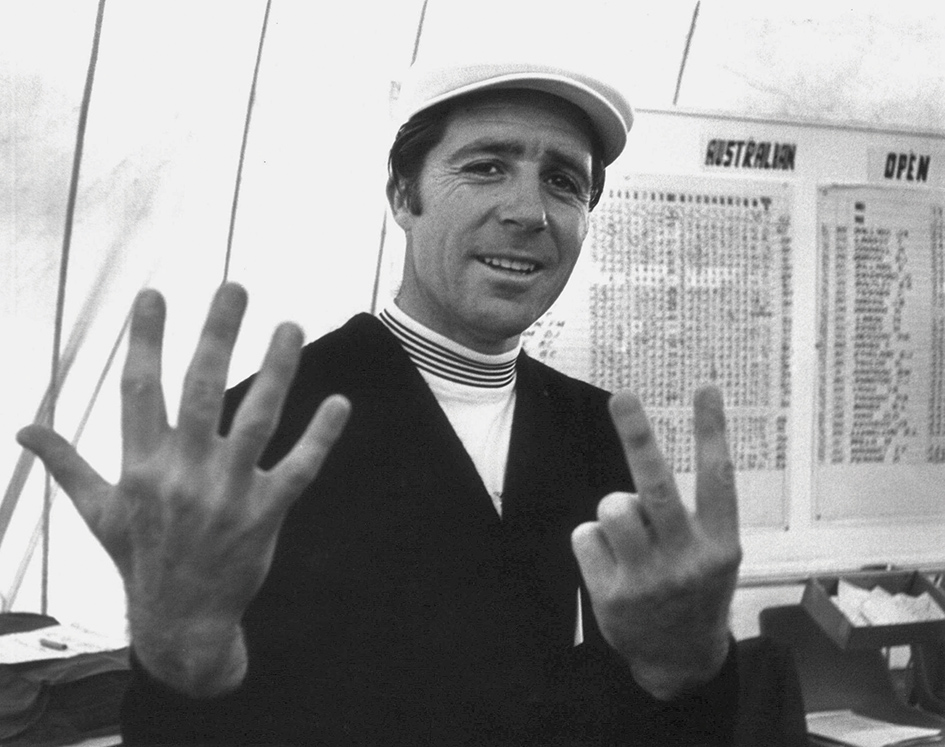
Gary Player after claiming his seventh Australian Open title.
Gary Player
“WE all used to go to the Slazenger factory and have lunch, work on our golf clubs. They had an old Scot there called ‘Sandy’ and he used to work on our clubs. Noel Morris, the head of Slazenger’s, would be inviting all the best players from around the world to come out and play. I mean, golf was humming in Australia. It was a special time.”
Was 1956 the first year you came to Australia to play golf, and was it Norman Von Nida that encouraged that visit?
“Yes, it was. Norman was a wonderful ambassador for Australian golf. I remember after I won in England as a young man, Norman came up to me and said, ‘You’re going to be a world champion, I’d like you to come play in the Australian Open.’ His encouragement meant the world to me at the time on so many levels. My career was really just starting and to have an accomplished professional say that to me reaffirmed my commitment to becoming a global champion.”
You won three times during your first Australia visit in 1956, and a further three times in 1957 including the Australian PGA title beating Peter Thomson 2 up at Huntingdale. Can you share a few memories of this great man?
“One of the greatest matches I ever played was the Australian Open at Huntingdale against Peter. We were neck-and-neck for 36 holes, and I don’t remember either of us hitting a bad shot. Peter was the straightest hitter I ever saw, along with Calvin Peete and Ben Hogan. We played many fine matches, and while I often had the better of him, I had the deepest admiration for his skill and character.”
Shooting two rounds of 62 in the 1965 Australian Open at Kooyonga for the first of your seven titles, and still the scoring record at 264 (28-under par), what equipment were you using and how far were you hitting it?
“I used Slazenger clubs and the Slazenger B-51 ball. With those clubs, I hit my driver about 265 yards, today they’d probably go about 50 yards farther, plus-minus. A 7-iron for me was 150 yards, while now the same club goes 175. Different era, same challenge.
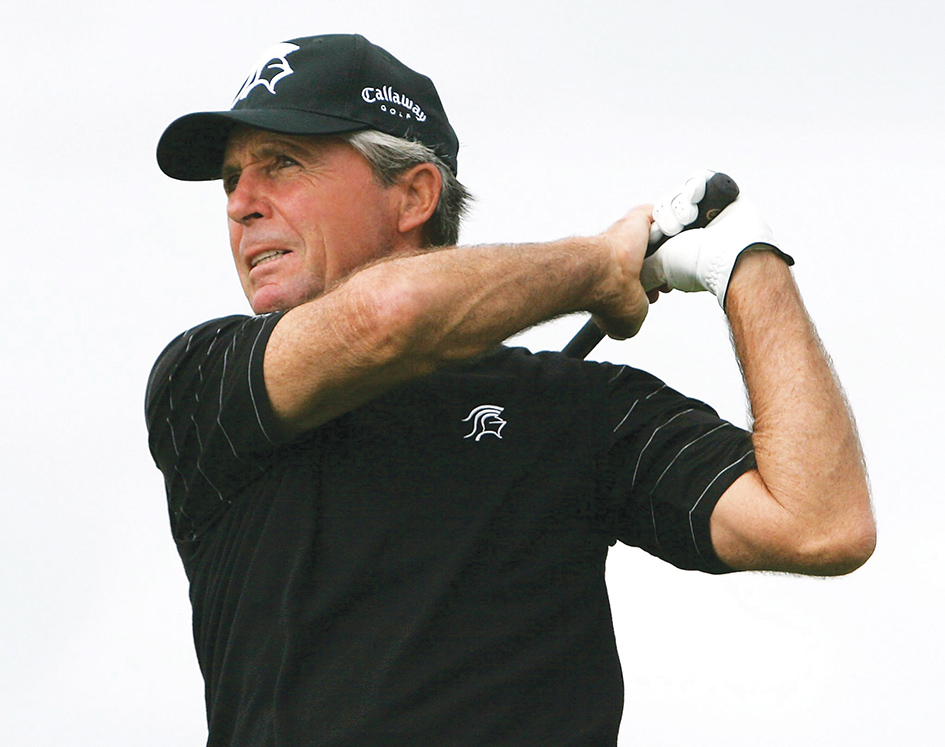
South African Gary Player will celebrate his 90th birthday on November 1.
Your score of 264, one wonders if it will ever be beaten…28 under par?
“All records eventually fall. But if I’m not mistaken, that may still stand as one of the longest-lasting scoring records in championship golf. Not on the PGA TOUR but perhaps for a national open.”
For the first time in nearly 30 years, the Australian Open returns to Royal Melbourne in December. You won there convincingly in 1963. Can you recall that week and your first impression of the course?
“I’ll never forget Royal Melbourne, it’s one of the greatest golf courses in the world. In 1963 I won by seven shots, and that victory helped me enormously. I’d just come off playing the World Cup in Paris, and I remember Jack, Arnold and myself had to make a tough decision because there was a heavy fog delaying our flight. We were told that arrival would be about three hours before our tee time. They said no thanks, but I didn’t want to miss it, especially since I won the year prior. It was hectic travel but quite common in those days. I flew from Paris to New York to San Francisco to Hawaii to Fiji to Sydney before arriving in Melbourne right at three hours to spare. Ate a sandwich on the drive in and went straight to the first tee without ever seeing the course. Winning after that might be my greatest accomplishment in professional golf given the circumstance.
“I went on a similar trip a few years earlier and doing so enabled me to win the Ampol Tournament, which gave me the means to get married. Perhaps that is the most important win of my professional career as Vivienne and I started our lives together as husband and wife shortly after.”
Is it true you found a putter in Japan in a second-hand shop and won several majors with it?
“That’s true. I found a putter in Japan for about $10 at a sporting goods store when I was there walking around the city with Arnold Palmer. I went on to win the entire Grand Slam with that putter and used to joke that I could have sold it for millions! A funny story, a journalist asked me a similar question about that putter after I won the Grand Slam, and I replied, ‘If I had to choose between my wife and my putter, well, I’d miss her.’ I came home that night and found my putter wrapped in a negligee with a note attached from Vivienne. She jumped out from behind the curtain, and we had a good laugh.”
Would you agree that Norman Von Nida was the greatest bunker player you ever saw, and that he motivated you to become so strong from the sand?
“Yes, Norman was a genius out of bunkers. We used to play for a pound a shot. I learned so much from watching his skill. He had a profound influence on me.”
You lost the Australian Open to Frank ‘Chops’ Phillips by one shot in 1957. Can you share a few words about him and Ossie Pickworth?
“Ossie was a tough competitor, very difficult to beat. Frank Phillips was a tremendously talented player, and one of the few times I truly lost my temper was against him. I had a big lead with six holes to go and let it slip. I went back to my hotel, threw my golf bag against the bed, and shocked my wife. I don’t think she’d ever seen me that angry.”
Aside from the Wills Masters and your wedding, what other memories of Australia stand out, and how important was Slazenger to your success down under?
“Slazenger was integral. I used to visit their factory, work on my clubs, and felt a special connection to the brand. Beyond equipment, I travelled the entire country, almost every year. Visiting Australia became a joy of my life. The love I received from the Australian people still makes me emotional today.”
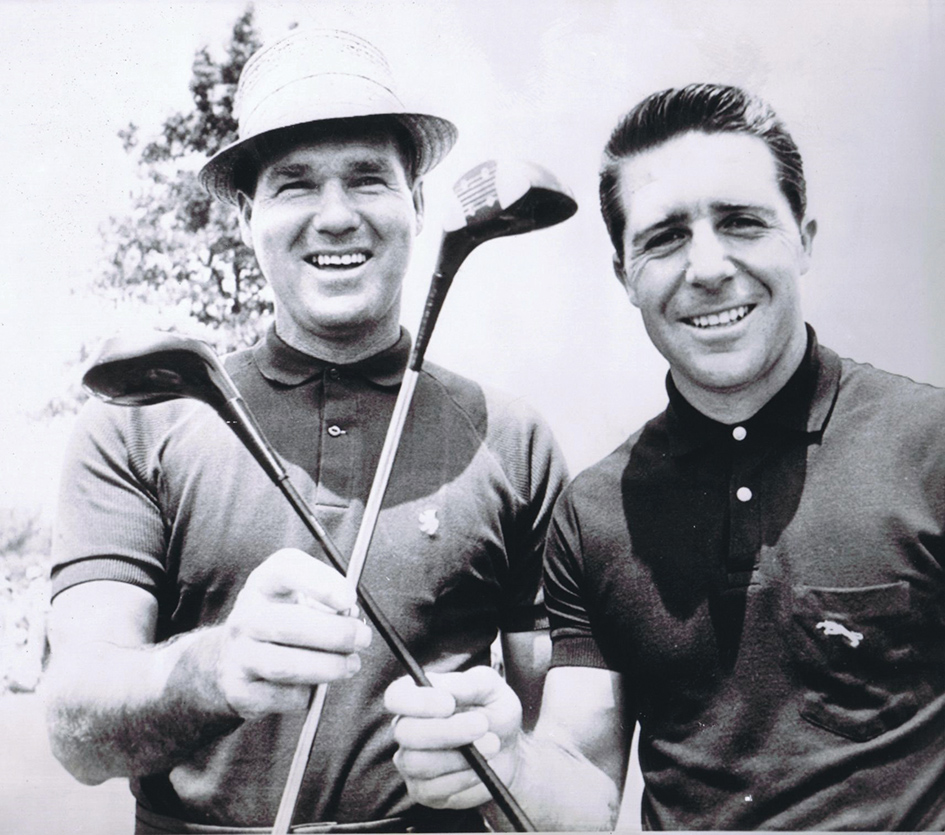
Player was a fan of Australian golf, and Australian golfers. Pictured with Kel Nagle.
Graham Marsh talks about your exceptional grit on the greens. Aside from practice, any tips on developing that mental toughness?
“That’s very kind of Graham, he was a fine golfer and a good friend. Mental toughness comes from work, discipline and a refusal to give in. You’ve got to believe in yourself, no matter the situation. Players today have all the talent in the world but need to work on their mind. Same for young, aspiring golfers. It’s the key to becoming a champion.”
When I think of a World Tour for golf, I think of you, Peter Thomson, and Bobby Locke. What role did Locke play in inspiring you both?
“Peter and I had immense admiration for Bobby Locke. He took us both under his wing and wanted us to be successful. America has never given him the credit he deserves. He should be in the top 50 players of all time, without question. As a putter, I would even give Bobby the edge over Tiger Woods. But the greens each played on were so different, it’s hard to give one a true edge. Bobby was more of a jab putter, which was necessary given the greens were much slower in his time. He was extraordinary.”
Yourself, Arnold Palmer, and Jack Nicklaus have done so much for golf and for charity. Can you list a few causes close to your heart?
“Our Gary and Vivienne Player Foundation remains my greatest passion. The funds we raise in South Africa support the Blair Athol School, but we’ve also raised money for many other causes worldwide. I have great respect for what Jack and Barbara Nicklaus have done for children. Jack once said that together, with Arnold as well, we’ve raised more than $600 million for charities over our lifetimes. That’s one of golf’s finest legacies.”